For almost 25 years, the Australian Open has been famed as the Grand Slam of Asia-Pacific, an even stronger distinction as AO 2026 looms.
Superstars like Japan’s Naomi Osaka and China’s Zheng Qinwen have boosted what are already enormous tennis fanbases and AO broadcast markets with excellent performances at Melbourne Park. That Asian audience promises to grow further thanks to the rise of Filipina icon Alexandra Eala and Indonesian star Janice Tjen – players hailing from nations with a combined population of around 400 million.
Osaka, Zheng, Eala and Tjen will be joined in the Australian Open main draw by the winner of this week’s AO Asia-Pacific Wildcard Play-off in Chengdu.
MORE: Impressive AO Asia-Pacific Wildcard Play-off field set
There’s also plenty of interest in Asian men’s tennis as 2026 approaches.
Japan’s No.1 man, Shintaro Mochizuki, will join forces with Osaka for Team Japan at the season-opening United Cup, while a trio of Chinese stars – Zhang Zhizhen, Shang Juncheng and Wu Yibing – are all taking promising steps in their comebacks from injury.
They sit behind exciting Chinese No.1 Bu Yunchaokete, who along with Wu will be battling for the men’s AO Asia-Pacific wildcard in Chengdu.

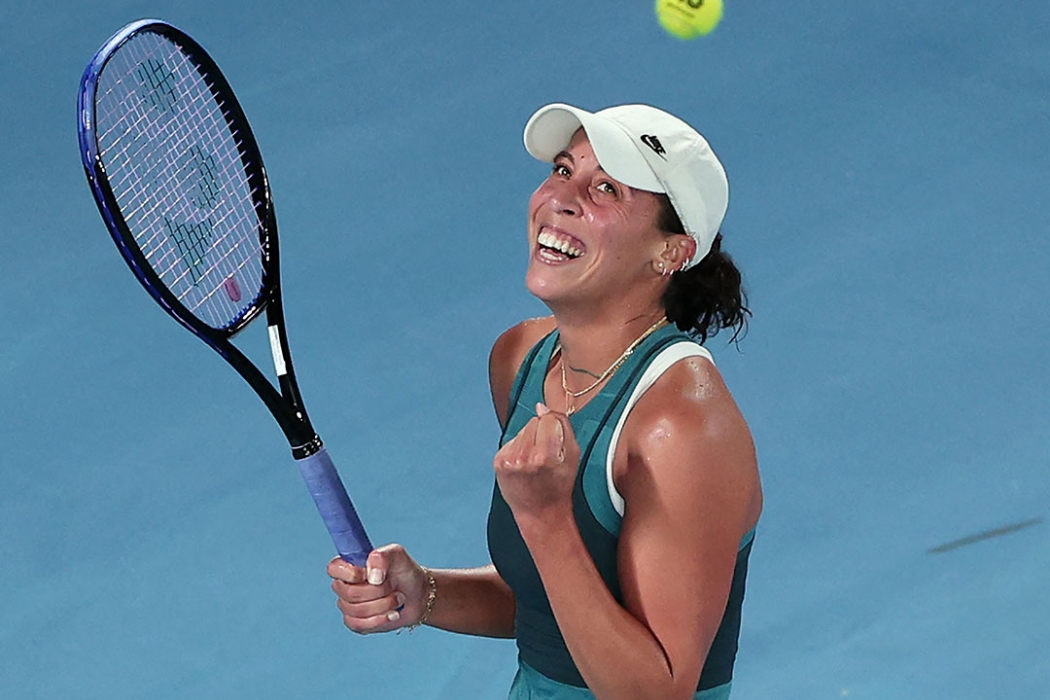
Meanwhile, with all-conquering world No.1s Tokito Oda and Yui Kamiji shaping as favourites for the AO 2026 men’s and women’s wheelchair titles, and recent AO junior champions Rei Sakamoto and Wakana Sonobe both rising above the AO qualifying ranking cut-off, the Asia-Pacific presence is felt through the entire three-week Australian Open experience.
Those last four players hail from Japan, the Australian Open’s fifth-largest broadcast market. It’s been this way for the better part of a decade, with the AO beamed into the homes of Japanese fans by WOWOW, one of the tournament’s longest-standing broadcasters in a partnership dating back to 1992.
That audience grew as Japanese superstar Kei Nishikori advanced to four Australian Open quarterfinals between 2012 to 2019, and spiked to more than 20 million as Osaka won the 2019 women’s single title in a thriller against Petra Kvitova.
Those figures made it the most-watched TV program in Japan during AO 2019 and meant it was among the country’s highest-rating event broadcasts in the previous four years.
Australian Open 2025 saw a 34 per cent year-on-year increase in Japanese viewing hours, no doubt influenced by the presence of Osaka and Nishikori – who both enjoyed early-round wins – at an event which aligns closely with Japan’s time zone.
Osaka, a former world No.1, has since soared back inside the world’s top 20 after her Montreal final and resurgent run to the US Open semifinals, contributing to the anticipation keenly felt at the recent AO 2026 Japan Launch in Tokyo.


“The connection between Japan and the AO continues to grow stronger each year,” said Cedric Cornelis, Tennis Australia’s Chief Commercial Officer. “We’re thrilled to have recently renewed our long-term media rights agreement with WOWOW, and [at AO 2025] we also had 6.2 million web and app impressions, nearly 16 million social media impressions and 31 million unique cross-platform reach in Japan alone – a testament to the passion of Japanese fans.”
Those numbers get even more eye-watering when you consider China, a country of more than 1.4 billion people.
The nation’s tennis boom began 15 years ago with the rise of Li Na, who powered into the final of Australian Open 2011, then won her first major title at Roland Garros just a few months later. The boom kicked into overdrive when Li won her second Slam title at Australian Open 2014.
Her position as Chinese tennis megastar has since been assumed by Zheng, who reached the final at AO 2024 then claimed singles gold for China at the Paris 2024 Olympics, achievements that made her one of the world’s highest-paid female athletes. An elbow injury in the back half of 2025 means a highly-anticipated return for Zheng Down Under in 2026.
The fact Li and Zheng have fuelled tennis interest in their homeland, while making breakthroughs at the AO – a tournament that plays out in a great time zone for the country’s huge fan base – made China the stage for another recent AO 2026 launch event, in Shanghai.
“There are 25 million tennis enthusiasts in China… Nearly one in every 50 people in China is a hardcore tennis fan,” said Roddy Campbell, Tennis Australia’s Director of Partnerships and International Business. “The proportion of our audience that comes from this region is quite staggering.”
Observed Chinese-Canadian writer Alyx K. in an October article for Racquet: “The audience itself looks different than in the West. In Europe or the US, older fans form a dependable backbone of ticket sales. In China, that base is far smaller. Tennis only gained mainstream traction with Li Na and has surged since Zheng’s Olympic gold, making for a younger core fan base.
“The passion is undeniable. On social media platforms like Weibo and Xiaohongshu (RedNote), you’ll find a roaring community where the commentary is raw, obsessive, and deeply informed.”
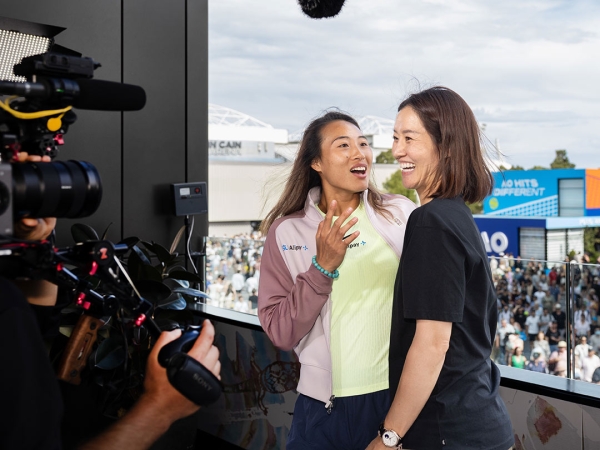
We’ve since seen the impact of Eala’s emergence. The 20-year-old lefty became the first player from the Philippines to crack the top 50, and her success in 2025 has sparked passionate fandom, both online and among the vast Filipino diaspora who attend tennis events across the globe.
MORE - "I could see it coming": Perez recalls clues to Eala's breakthrough
And then there’s Tjen, the best-performed Indonesian player in more than 20 years. She’s just behind Eala, at world No.53, and plays with a style strikingly reminiscent of AO 2022 champion Ash Barty.
Neither competed in the main draw at Melbourne Park in 2025, meaning their debut in January – coupled with Osaka’s resurgence, Zheng’s return, and much more – sets the stage for an incredible atmosphere and buzz around the Grand Slam of Asia-Pacific in 2026.