The top of women’s tennis has organised itself into a consistent hierarchy in recent seasons.
There are reliable major winners, top-10 stalwarts and fewer tournament draws that descend into upset chaos and close with unpredictable champions.
At Australian Open 2025, we were one point away from a world No.1 v No.2 final between Aryna Sabalenka and Iga Swiatek, something we got at the very next Slam when Sabalenka met Coco Gauff at Roland Garros. That was after six of the top eight seeds reached the quarterfinals in Paris.
MORE: Gauff denies Sabalenka again to win second Grand Slam title
EXPERT PICKS: Who will be the Wimbledon champions in 2025?
Starting in January 2023, Sabalenka, Gauff and Swiatek have combined to win seven of the 10 major titles on offer. After Gauff cracked the top 10 in September 2022, all three players remain entrenched in that bracket. Together, Sabalenka and Swiatek have reigned for 168 uninterrupted weeks at world No.1.
But it’s a different story when tennis shifts to grass and Wimbledon hosts the third Grand Slam tournament on the calendar.
The three majors not won by Sabalenka, Gauff and Swiatek since the start of 2023? Two were Wimbledons, where Czechs Marketa Vondrousova and Barbora Krejcikova triumphed in 2023 and 2024.
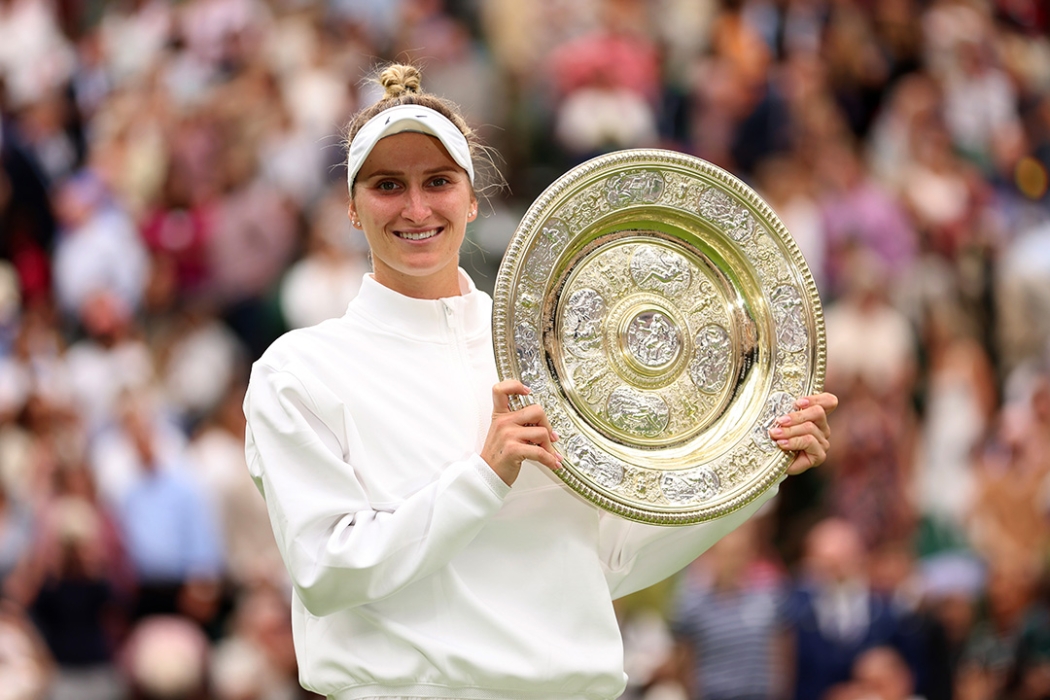
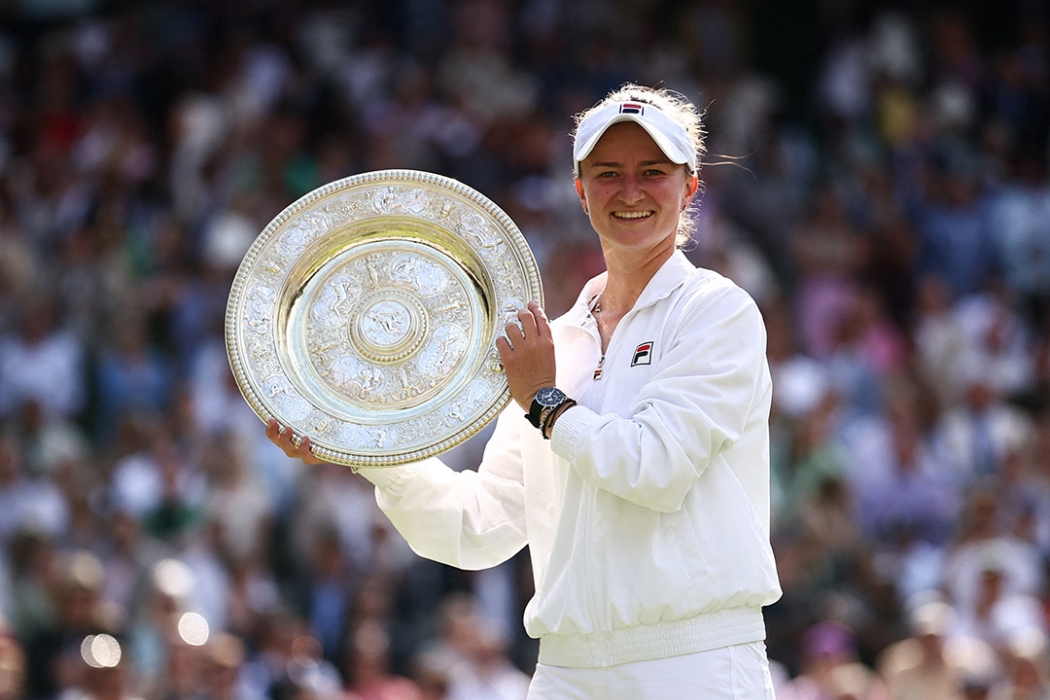
Wimbledon is the only Slam at which no member of the Sabalenka-Gauff-Swiatek trio has ever triumphed. And according to Craig Tyzzer, who coached 2021 Wimbledon champion Ash Barty, that might not change this year.
"I'm not sure if Coco or Iga, with their grips on their forehands, are capable [of winning it], especially if the courts get faster, if it's hot and fast,” he said in a soon-to-be-released interview on The Sit-Down podcast.
“I think they might struggle a bit. And then obviously Sabalenka's still in there.”
Surface unpredictability
Former world No.26 Casey Dellacqua, a long-time doubles partner to Barty, believes Wimbledon is an extremely open tournament in complete contrast to Roland Garros, where storylines have often centred on Swiatek, Sabalenka and Gauff.
"[Grass is] not a surface that a lot of players, really besides this few weeks of the year, really play or practise on,” Dellacqua told ausopen.com.
"There's still a game-style that definitely allows [certain] players to really expose those big-hitting players that maybe don't feel as comfortable on the grass.
"The movement on grass is so different to clay, and that's something you're not prepared for until you go on it. Everyone's glutes and quads are all sore for the first few days ... you have to stay so low.
“There's a real knack in terms of absorbing pace and the way that your body is positioned on the court.”
Sabalenka remains a logical choice for Wimbledon favourite.
She’s the clear world No.1, consistently the best performer at the majors, and the reigning US Open champion who is targeting her fourth consecutive Grand Slam final.
But she has some Roland Garros scar-tissue to overcome, and in something of a quirk, since her first-round exit from the 2019 tournament she has played just two Wimbledons.
SABALENKA: “Time to rest, learn and come back stronger”
The 2020 championships were cancelled due to the COVID-19 pandemic and Sabalenka was barred from entering in 2022 as a Belarusian athlete. Last year a shoulder injury prompted her withdrawal just before the tournament.
She reached the last four in 2021 and 2023 and led by a set in both semifinals – plus was up a break in the second set against Ons Jabeur in 2023 – before losing.
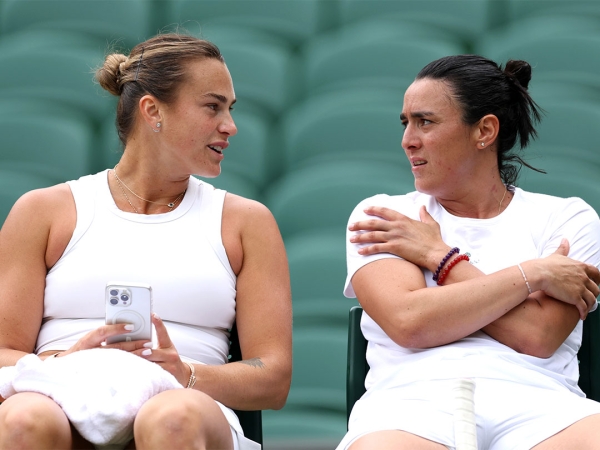
The flipside is that Parisian disappointment, plus her lack of opportunities to compete at Wimbledon, could be motivational.
“Go decompress in Mykonos next week. Drink tequila and eat gummy bears, as you vowed to. Then flush this and win Wimbledon,” wrote Jon Wertheim, embodying Sabalenka’s coach, in his 50 Parting Thoughts from the 2025 French Open.
“The grass suits your game more than the clay. You have won 10 of your 12 matches there. You will be the favourite. Win that, it will be the ultimate balm to soothe the wound of Paris.”
Countless contenders
In 2023, Jabeur was favoured to win the final but came unstuck against Vondrousova – the unlikeliest of champions, ranked outside the top 40, who became the first unseeded woman to win Wimbledon in the Open era.
And Vondrousova bobbed up last week, again seemingly out of nowhere, to win the WTA grasscourt title in Berlin. She was ranked 164th and playing just her sixth tournament of 2025.
Along the way she beat reigning AO champion Madison Keys, Jabeur in the quarterfinals, and Sabalenka in a comprehensive 6-2 6-4 semifinal win.
Jabeur’s Berlin resurgence, as a lucky loser, was heartwarming, and she overwhelmed last year’s Wimbledon finalist Jasmine Paolini 6-1 6-3 to reach the quarters.
"I'm hoping [the Wimbledon champion is] a bit of a dark horse like Ons Jabeur. I'd love Ons to fulfil her dream to win it as well,” Tyzzer said of the player who also reached the 2022 final. “She's got the talent, and the year she lost to Vondrousova, I think she just played a final the wrong way.”
But in another example of the grasscourt season’s unpredictability, Jabeur was ejected in the first round of her next tournament, Eastbourne, by rising Aussie star Maya Joint.
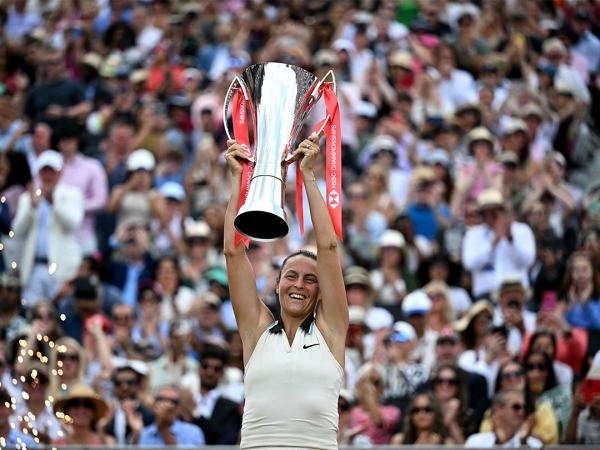
Ditto for Tatjana Maria, who made history as the first women’s champion at Queen’s Club in more than 50 years following the WTA’s return to the storied tournament.
The 2022 Wimbledon semifinalist carved up a succession of quality opponents – Karolina Muchova, Elena Rybakina, Keys and Amanda Anisimova – to win the biggest title of her career as an 86th-ranked qualifier.
Yet Maria’s very next grasscourt tournament, in Bad Homburg? It ended in a 6-0 7-6(1) first-round loss to Leylah Fernandez, another player she beat at Queen’s.
Anisimova, Keys and Muchova are former Wimbledon quarterfinalists, while Rybakina won the title in 2022. Also positioned as contenders are Elina Svitolina – a Wimbledon semifinalist in 2019 and 2023 – and Donna Vekic, who last year came within a few points of the final before a dramatic loss to Paolini.
“Seeing who's been doing well on grass [in 2025]; last year's finalists aren't even on the radar – Krejcikova and Paolini haven't been sort of sighted on the grass or done much this year,” Tyzzer observed.
"Muchova I think is another good grasscourt player, and maybe Rybakina, she could come out of the blocks.
"I’m looking forward to seeing what happens at Wimbledon, because it's always different.”