This feature originally appears in Australian Tennis Magazine’s April/May issue, which has a special theme of ‘turning points’. It has been republished here following Badosa's first-round win over four-time major champion Naomi Osaka in the opening round at Roland Garros on Monday.
Now in its 50th year, Australian Tennis Magazine continues to bring you in-depth coverage from the international tennis circuit plus features, instructional content and more. Visit the online shop to preview and order your copy.
It didn’t take long for the light-hearted gibes to recommence after Paula Badosa’s maiden Grand Slam semifinal ended in defeat to good friend Aryna Sabalenka.
No sooner had world No.1 Sabalenka finished her on-court interview celebrating her third straight Australian Open final berth and promising an all-expenses-paid shopping spree for her beaten “tour soulmate” in January, than footage emerged of the pair sharing a laugh beneath Rod Laver Arena.
It was a moment few but the closest of tour companions would entertain so soon after such a loss with so much on the line.
“[I told her] that it was really unfair for me that she played this level today,” Badosa grinned. “I was expecting, of course, a good level, but maybe not that much.
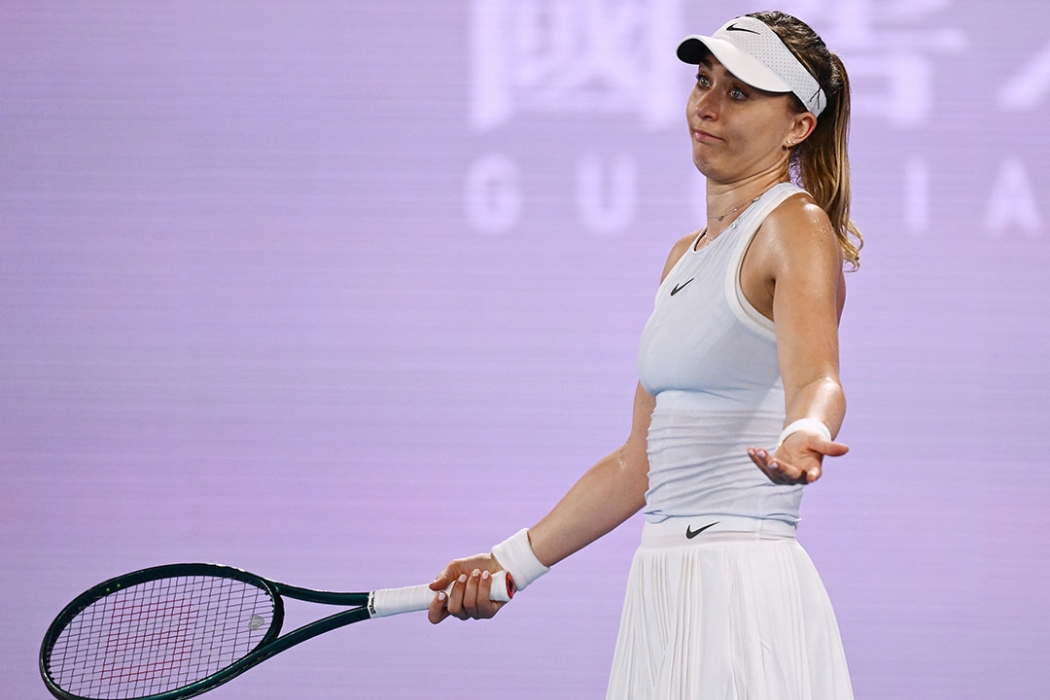
“But no, she came to say that she played three semifinals before she won a [Grand Slam] title. She was very proud of my improvement lately, especially with all I’ve been through.
“So we were just joking around… Look, if I have to lose against somebody, of course I want to lose against world No.1 and against Aryna.”
The Spaniard’s career-best campaign at a major was her strongest validation yet that she was right not to have thrown in the towel last season, despite doctors’ advice that her playing days were numbered following a serious back stress fracture.
Even as recently as May 2024 she was on the brink of calling it quits once and for all, frustrated she was nowhere near her former level and languishing at world No.140.
“I had very negative feedback from doctors about my back and then physically I wasn’t seeing myself at the same level,” she told Australian Tennis Magazine.
“I’m a talented player but I think I need my physical[ity] to play. I’m a very explosive player so when that’s not there and I’m a little bit slower I think my level drops a lot.
“I always say, all my respects to all the players but, for me being ranked 70, 80, 90 doesn’t make me happy. I want to play on Centre Court, I want to play against the best players in the world.
“That’s what drives me, motivates me. I wasn’t in that level.
“I was thinking a lot what to do in the future but also, I wanted to give it a shot to end the season and let’s see how it goes. It went very good so I’m really proud of myself how I fought through all that process.”
Wiping the slate clean
The lowest point came during her home tournament on clay in Madrid last May.
Still in pain, her back was not responding as well as hoped, and she had already taken two of a maximum three cortisone injections just to enable her to compete.
It prompted a shake-up of her team – a return to her fitness coach and nutritionist from three years earlier and new doctors.
“I wasn’t seeing myself where I wanted to be,” she said. “After that, I decided to make a few changes in the team. I thought here we’re going to start from zero, you’re out of the top 100 now.
“Let’s start building and let’s see if things come. The talent is there but physically I needed to get on point, let’s say, and slowly it started coming.”
Within months, Badosa’s level had already improved enough during last year’s US hard-court swing to convince her to keep playing. A first title in more than two years came at the WTA 500 event in Washington DC in August before her first Grand Slam quarterfinal since 2021 at the US Open.
“I think it was a little bit the key [winning a title]. I was playing well before, but I needed a big title, I needed a result,” Badosa told Australian Tennis Magazine.
“I think since Washington I’ve been winning so many matches and finally, maybe it’s not the best thing to say, but you want to prove yourself and you sometimes need results to show that, so I think that made me believe that I could be back at the top again.”
Leap of faith
Not for the first time in an up and down 2024, Badosa reaped rich rewards for putting her faith in the unknown – this time in the off-season away from the physiotherapy, on-court training and fitness drills.
Where most players opted for balmy beachside breaks ahead of a return to the heavy off-season grind, the Spaniard and her boyfriend, Greek star Stefanos Tsitsipas, headed to the Nordic north to the frozen landscapes of an Icelandic winter.
A holiday where the outside temperatures hovered around –12C was certainly a left-of-field choice, one which Badosa was not so initially sure about.
“It was a crazy experience. It was my first time in cold weather,” she said.
“At the beginning I was a little bit like, ‘I don’t think this is going to work, where are you taking me?’, but finally when I arrived there it was an amazing experience, an adventure, amazing landscapes.
“Of course, it was cold weather, but I liked it, it was super different. We’re used to the warm weather, but I think at the end it was worth it.”
Badosa warmed up for her breakout Australian Open in Brisbane in January where she maximised her court time with a rare doubles appearance alongside Ons Jabeur, another of her close tour friends. Jabeur, a three-time major finalist, was on a comeback journey of her own from injury, having struggled with a shoulder complaint among other ailments last year.
The Tunisian was able to relate to those doubts whether it would all be worth it.
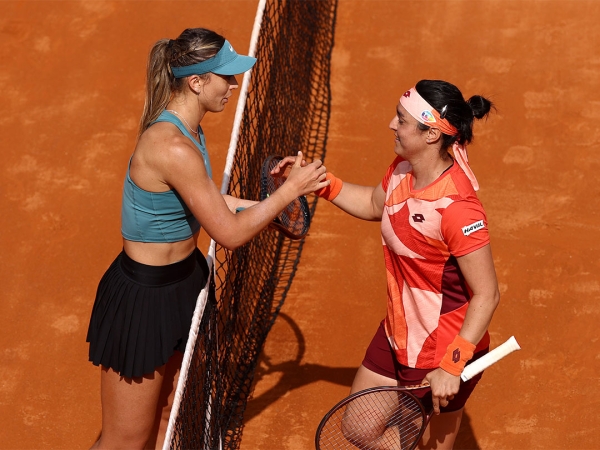
“I love to play with Paula. I love hanging out with her and I want to hang out with her more on court,” Jabeur told Australian Tennis Magazine at her first tournament back in Brisbane.
“When I first came back to practice it was a bit tough for me. It was like a real break so for me I struggled a little bit with coming back. It was nice talking to Paula because I know she went through this, and I know the struggle that she had.
"She’s such a good example because she’s the [WTA] Comeback Player of the Year. Deep inside I know this isn’t going to be easy and I need to be patient and to find my level.”
Believing again
While disappointed at a 6-4 6-2 defeat to Sabalenka at Melbourne Park, Badosa could hardly believe how far she had come.
Victory over Coco Gauff in the quarterfinals handed the 27-year-old her first top-10 Grand Slam win and prompted her to sign the on-court camera lens with “a la tercera va la vencida”, an oft-quoted expression in Spain which loosely translates to “third time’s a charm”.
The former world No.2 went into the showdown with firm belief she was destined for more at her favourite Slam.
Having fallen short in two prior major quarterfinal forays – at Roland Garros in 2021 and Flushing Meadows last year – she successfully navigated uncharted territory and later packed her bags for Tullamarine Airport guaranteed a top-10 return for the first time since October 2022.
“It's an insane improvement, an insane improvement mentally, of believing, of coming back from that,” she said. “I was once top 10 but doing it two times I think not a lot of people are capable of that. I’m really proud of myself because it’s not easy when you’re 100 in the world and you have to face these kind of players, but in the first round. Coming back from that, I’m really, really proud of the journey.”
There was the unexpected bonus too of a promise fulfilled once she touched down in Doha for one of her subsequent tour events.
World No.1 Sabalenka kept her word from the Rod Laver Arena post-match interview and delivered a gift in person.
“She said she forgave me,” Sabalenka captioned the video she filmed of her friend opening the bracelet on her Instagram story.
With few ranking points to defend before May, Badosa stands to make up further ground before the season’s second major rolls around.
Gifts of jewellery are a small consolation for the bigger prizes she has in mind. “I'm never going to feel freedom until I win the tournament,” she declared.
Not that it was not all about materialistic benchmarks either.
“The back is great now, but you never know,” she said. “There are some days it’s worse than others, so I have to control it a bit.
“I wanted to prioritise myself and especially when you’ve been there of course you have the goal to be there again, but I think right now it’s to be healthy, to be happy and I think when that comes along my level raises.”